Data Analytics & Business Insights

I turn raw data into reliable insights that drive better business decisions by combining analytics, predictive modeling, and data governance to ensure impact with integrity.

2+
Years Experience
4
Projects Completed
Insights Generated
Victoria Abdul

Professional Background

My work isn’t just about building charts. It’s about understanding what the numbers mean and helping leaders make better decisions.I help organizations make sense of those numbers.

I turn raw data into clear, reliable insights while making sure each project is handled with proper oversight and governance. I’m also someone who enjoys solving problems; whether that means improving messy data processes, reducing manual work, or breaking down complex information so it’s easy to understand and use.

📊

Data Analysis & Visualization

Python, SQL, Power BI, Tableau

🔮

Predictive Analytics

Statistical modeling, forecasting, trend analysis

⚙️

Data Engineering

Snowflake, data warehousing, ETL pipelines

🤖

AI Governance & Automation

Framework implementation, process optimization

Featured Projects

Milton Hotels Dashboard
01

Milton Hotels: Revenue, Operations & Cost Optimization Analysis

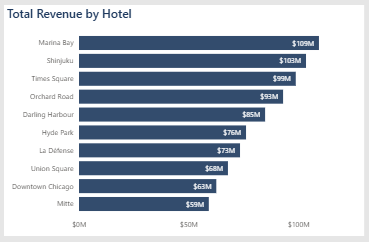
Milton Hotels had a growth question: Can we push revenue harder without hurting guests or inflating costs? Analyzing 7,600 daily records across a global portfolio, I found that pricing strategy drives revenue far more than occupancy does, and that guest satisfaction stays stable even when hotels are running at full capacity. The recommendation to leadership was to adjust their pricing. The operational foundation to support that growth is already in place.

Key Achievements:

  • Identified that room pricing (ADR) is a stronger revenue driver than occupancy, with a 0.81 correlation to RevPAR compared to occupancy's 0.58, giving leadership a clear lever to pull for revenue growth
  • Confirmed that guest satisfaction remains stable regardless of how busy hotels are, removing a key concern that had stood in the way of more aggressive occupancy targets
  • Found that energy costs are structurally flat across varying occupancy and revenue levels, meaning the business can scale without worrying about rising energy bills
  • Recommended a pricing led growth strategy supported by portfolio segmentation to identify which properties are pricing most effectively and replicate that across underperforming hotels
Python Pandas Matplotlib Power BI Google Colab
ShopSphere Analytics
02

ShopSphere Analytics: End-to-End Data Warehouse for E-Commerce Intelligence

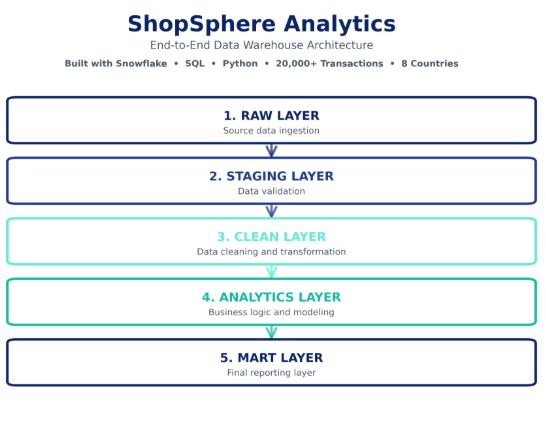
ShopSphere had migrated to Snowflake but could not answer basic questions about where it was making money. I built a five-layer data warehouse processing 20,000+ transactions across 8 countries, then used it to surface answers to five CEO-level questions around profitability, product performance, discounting, customer value, and churn. The result was a $55.26M revenue picture that showed leadership exactly where margin was coming from and where their attention should go.

Key Acchievements:

  • Built a system that gave leadership visibility into profitability across 8 countries for the first time
  • Discovered that 22% of customers generate 45% of total Customer Lifetime Value, giving leadership a clear case for a dedicated Premium customer retention strategy
  • Identified Electronics as the highest margin category despite lower order volume, revealing that volume focused marketing was underweighting the company's most profitable product line
  • Confirmed that churn is not a current threat with 98.8% of customers in the low risk category, freeing leadership to redirect budget toward higher return opportunities
Snowflake SQL Python Plotly Data Warehouse Design
TopGear Revenue
03

TechGear A/B Testing: E-Commerce Anchor Pricing Experiment

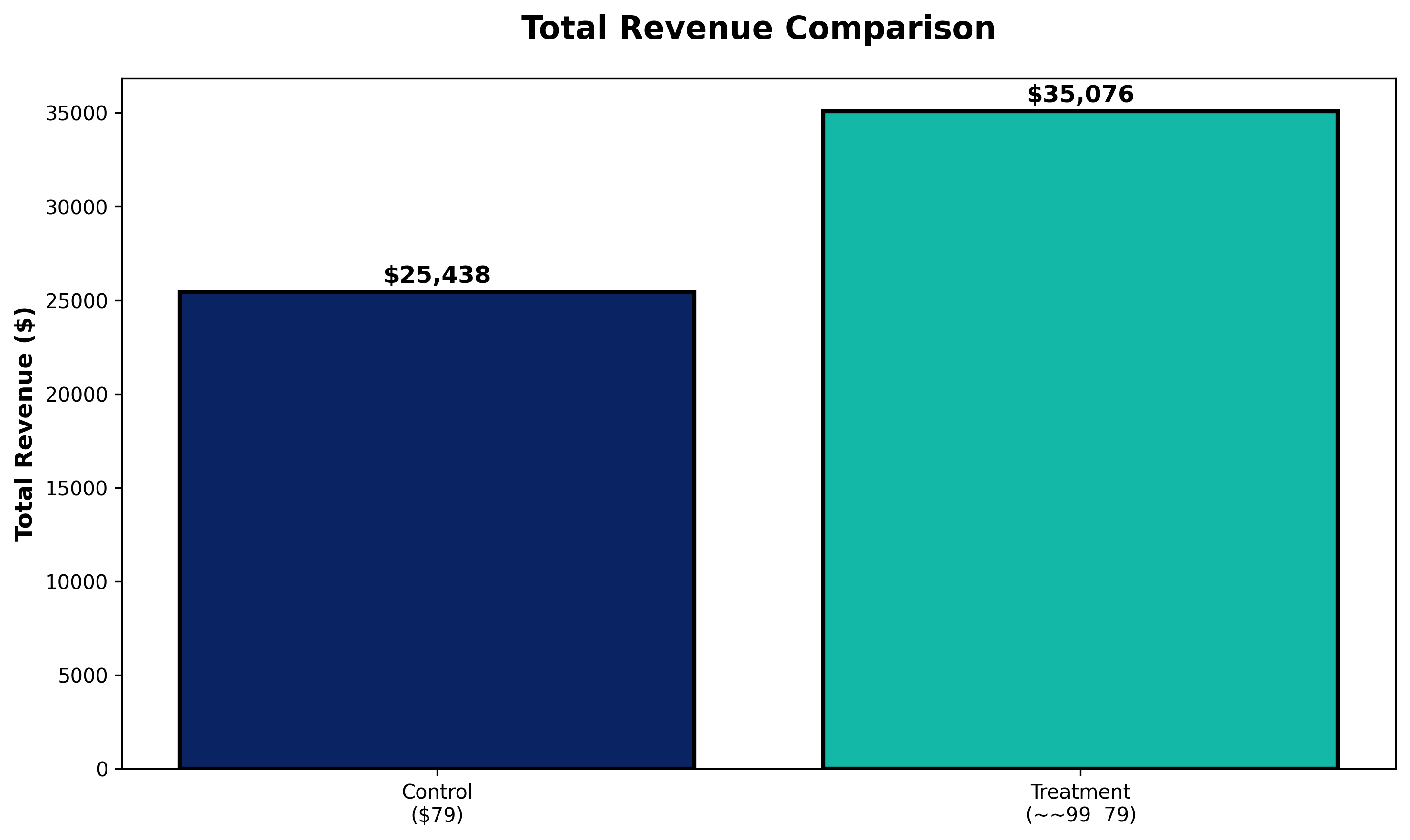
TechGear wanted to know whether showing customers a crossed-out original price alongside the current price would increase sales, or whether it was just a cosmetic change that had no real effect. I designed and ran a controlled experiment across 20,000 website visitors, splitting them evenly between standard pricing and anchor pricing. The result was a 31.1% conversion lift, a p-value of 0.0009, and a projected $836,400 in additional annual revenue at zero implementation cost.

Key Achievements:

  • Identified a 31.1% increase in conversion rate with anchor pricing (2.64% to 3.46%) across 10,000 visitors per group, with a p-value of 0.0009 confirming the result is real and not due to chance
  • Quantified the revenue impact at $9,638 over the 14-day test window and projected $836,400 in additional annual revenue assuming 100,000 monthly visitors, giving leadership a concrete number to evaluate against zero implementation cost
  • Found that anchor pricing increased revenue per visitor by 37.9%, from $2.54 to $3.51, meaning the effect goes beyond just converting more people but also generating more value from each converted visitor
  • Recommended immediate rollout with a structured plan to test the effect across other product categories and monitor for long term sustainability of the conversion lift
Python Pandas SciPy Matplotlib Statistical Testing
Sales Forecasting
04

GlobalMart Sales Forecasting: E-Commerce Revenue Prediction

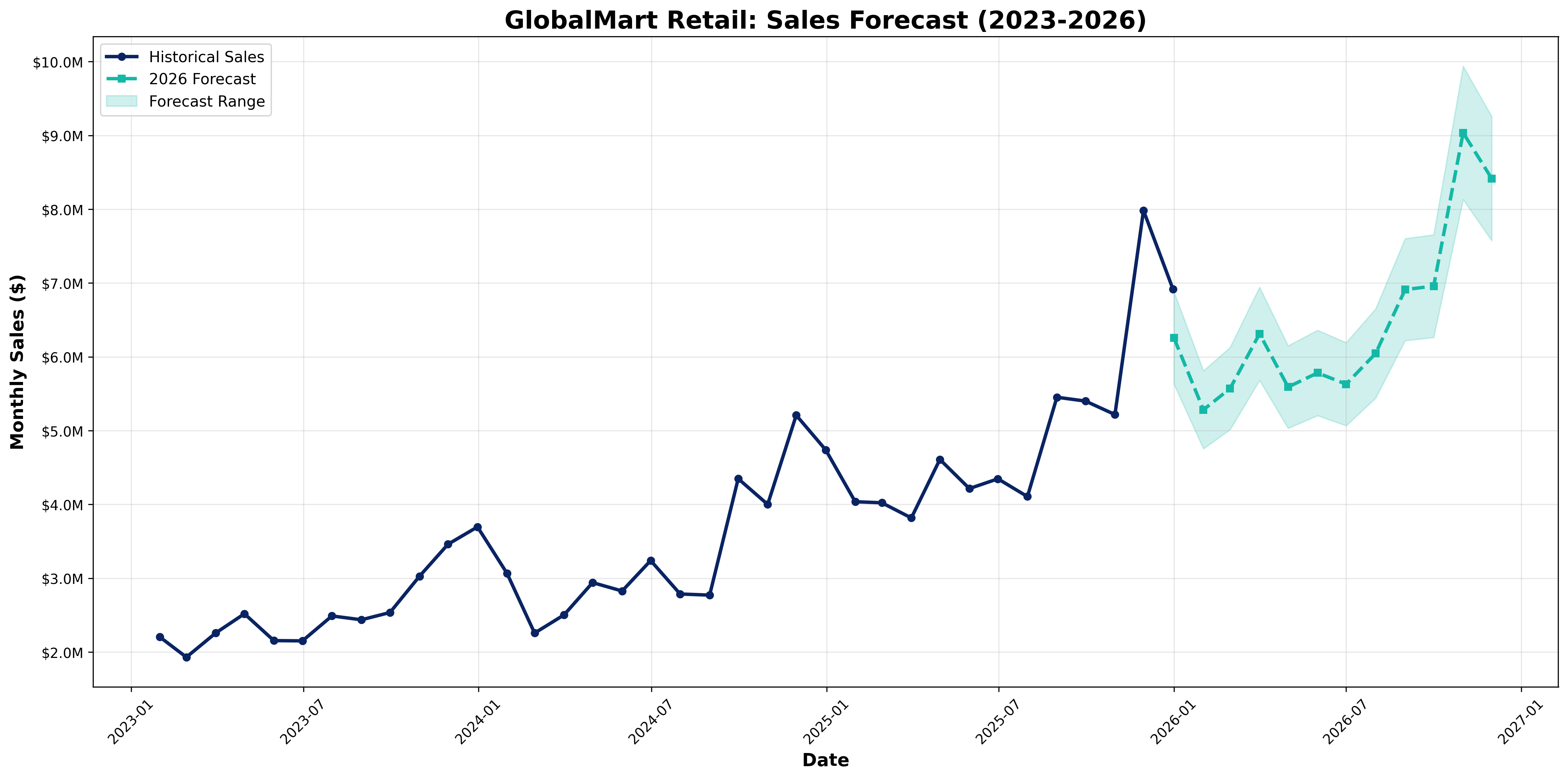
GlobalMart had been growing fast but planning reactively. I analyzed three years of sales data totaling $131.67M, decomposed the trend and seasonal patterns, and built a monthly forecast for 2026 projecting $77.79M in revenue, a 29.4% increase over 2025. More importantly, the forecast revealed that November and December alone account for nearly a third of annual revenue, giving leadership a concrete operational trigger: prepare for Q4 or risk leaving money on the table.

Key Achievements:

  • Forecast 2026 revenue at $77.79M, a 29.4% increase over 2025, using a trend plus seasonality model built on 36 months of historical data
  • Identified that November and December together generate roughly 25% of annual revenue, with November forecast to hit $9.04M, creating a clear and urgent case for Q4 inventory and staffing preparation starting in October
  • Quantified the monthly revenue swing at $3.75M between the weakest month (February at $5.28M) and the strongest (November at $9.04M), translating directly into a cash flow planning recommendation for the 2026 budget cycle
  • Found that summer months consistently underperform the annual average every year, recommending a shift in marketing strategy from acquisition to retention during June through August to preserve budget for Q4 where conversion rates are highest
Python Pandas Numpy Matplotlib Time Series Forecasting

Let's Connect

I'm always interested in discussing data analytics opportunities, collaboration on interesting projects, or exploring how data-driven insights can solve complex business challenges.